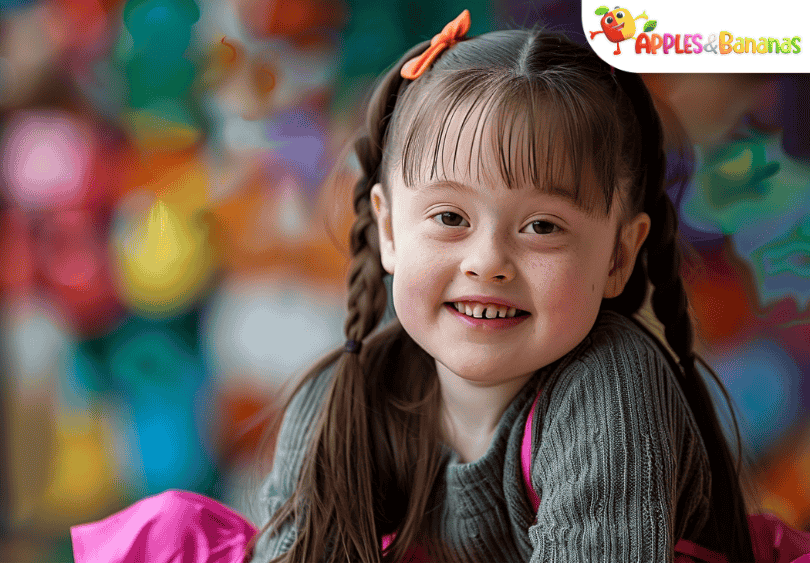
Down syndrome is a genetic condition caused by the presence of an extra copy of chromosome 21. This additional genetic material affects the individual’s development and leads to the characteristic physical features and developmental challenges associated with the condition. While each individual with Down syndrome is unique and possesses their own strengths and challenges, many experience some level of learning difficulty.
Understanding Down Syndrome:
Down syndrome affects about 1 in every 1000 babies born in the world. It is not an illness or disease but a condition that an individual is born with and will have throughout their life. People with Down syndrome often have distinct physical features, such as a flattened face and almond-shaped eyes and may have various medical and developmental issues. Varying degrees of intellectual disability, usually mild to moderate.
Developmental milestones such as walking and talking are often reached later than in typically developing children. However, with the right support and educational strategies, individuals with Down syndrome can achieve significant academic and personal milestones.
Learning and Development in Down Syndrome:
- Cognitive Development in children with Down syndrome is typically slower than in their peers. However, many can learn and excel academically with tailored educational strategies
- Early Intervention programs are critical. These programs often include speech therapy, physical therapy and occupational therapy, which can significantly enhance the development of children with Down syndrome
- Inclusive Education, where children with Down syndrome learn alongside their peers, has shown positive outcomes. This approach helps in social integration and learning by observing and interacting with other students
- Individualized Education Plans (IEPs): An IEP is a customized educational plan designed to meet the unique needs of a child with Down syndrome. It includes specific goals and the means to achieve them, taking into consideration the child’s strengths and areas that require additional support
- Teaching Strategies: Visual learning aids, hands-on activities and repetitive instruction are effective teaching strategies for students with Down syndrome. These methods help reinforce learning and make abstract concepts more tangible
- Social Skills Development: Developing social skills is as crucial as academic learning. Structured social skills training can help individuals with Down syndrome interact more effectively with their peers and build meaningful relationships
- Behaviour Management: Consistent behaviour management strategies are necessary. Positive reinforcement and clear expectations can help manage any behavioural issues that arise, providing a conducive learning environment
- Family Support: Family involvement is vital. Families can support learning at home by reinforcing the skills taught at school and ensuring that the child feels encouraged and valued
- Technological Aids: Assistive technology, such as speech-generating devices and educational software, can greatly enhance learning and communication for children with Down syndrome
- Lifelong Learning: Learning does not stop in childhood. Adults with Down syndrome can continue to develop skills and pursue educational opportunities throughout their lives, contributing to their communities and leading fulfilling lives
Children with Down syndrome benefit from a variety of activities that cater to their learning style, strengths and interests. These activities should be tailored to each child’s individual needs and preferences, ensuring a supportive and encouraging learning environment. Consistent positive reinforcement and patience are key to helping children with Down syndrome achieve their full potential.
Here are some activities that can promote learning and development:
- Visual Learning Activities
- Flashcards: Use for vocabulary, numbers, shapes and colors
- Picture Books: Enhances language skills and comprehension
- Storytelling with Illustrations: Helps in understanding narratives and sequences
- Hands-On Activities
- Puzzles: Develop problem-solving and fine motor skills
- Building Blocks: Encourage creativity and spatial awareness
- Craft Projects: Improve hand-eye coordination and following instructions
- Interactive and Social Activities
- Group Play: Develop social skills and teamwork
- Role-Playing Games: Enhance social interaction and language development
- Music and Movement: Combine physical activity with social interaction and learning rhythms
- Educational Technology
- Learning Apps: Tailored apps for reading, math and language skills
- Interactive Whiteboards: Engage in collaborative and visual learning
- Speech-Generating Devices: Assist with communication and language development
- Physical Activities
- Sports: Build physical fitness, coordination and social skills
- Dance Classes: Improve motor skills and provide a fun way to exercise
- Swimming: Low-impact physical activity that enhances muscle tone and coordination
- Therapeutic Activities
- Speech Therapy Games: Focus on articulation and language skills
- Occupational Therapy Exercises: Improve fine motor skills and daily living tasks
- Sensory Play: Activities like playing with sand, water or textured materials to enhance sensory processing
- Routine-Based Learning
- Daily Schedules: Use visual schedules to teach time management and sequencing
- Cooking Together: Follow recipes to learn math, reading and following instructions
- Gardening: Teaches science concepts, responsibility and motor skills
- Cognitive Development Games
- Memory Matching Games: Improve memory and cognitive skills
- Board Games: Teach turn-taking, strategy and following rules
- Counting and Sorting Games: Develop math skills and categorization
- Language and Communication Activities
- Reading Aloud: Enhances listening and comprehension skills
- Sing-Along Songs: Improve vocabulary and rhythm
- Interactive Storytelling: Encourage participation and creativity
- Community Involvement
- Library Visits: Encourage a love for reading and learning in a community setting
- Cultural Activities: Visit museums, theatres and community events to broaden experiences
- Volunteering: Build social skills and a sense of responsibility
Education and learning for individuals with Down syndrome present unique challenges, but with appropriate support, they can achieve significant academic and personal success. Understanding the needs of these individuals and implementing effective strategies can create an inclusive and supportive environment that promotes lifelong learning and development.
Some References:
These resources offer comprehensive information on Down syndrome, covering medical, educational and developmental aspects. They are valuable for parents, educators, caregivers and anyone interested in learning more about supporting individuals with Down syndrome.
- https://www.un.org/en/observances/down-syndrome-day
- https://ndss.org – offers a variety of resources including educational tools and activity suggestions
- https://www.down-syndrome.org/en-in – provides practical advice and activities tailored for different developmental stages
- https://www.globaldownsyndrome.org – offers educational activities, tools, and resources for parents and educators
- https://abilitypath.org – features resources and activities for children with special needs, including Down syndrome
- https://thetherapyplace.org – offers therapeutic activity ideas and resources